Neck Injuries in Sports: Causes, Acute Trauma, and Chronic Conditions


Neck injuries are relatively common in athletes across many sports.
In particular, acute neck injuries can be life-threatening or even career-ending if not handled properly.
Anyone involved in sports—athletes, coaches, and medical staff—should understand basic neck injury risks and causes.
Neck pain is not limited to athletes. Many people also struggle with neck stiffness and shoulder tension in daily life.
In this article, we’ll organize the common causes of neck pain and neck injuries, focusing on both sports-related trauma and chronic conditions.

目次
List of Neck Conditions (Alphabetical)
- Neck and Shoulder Stiffness
- Thoracic Outlet Syndrome
- Cervicobrachial Syndrome
- Cervical Radiculopathy / Cervical Myelopathy
- Cervical Spine Injury / Spinal Cord Injury
- Cervical Sprain (Whiplash)
- Cervical Disc Herniation
- Burner / Stinger Syndrome
Acute Neck Injuries
– Sudden Onset of Pain
This section covers injuries where pain appeared immediately after a specific event.
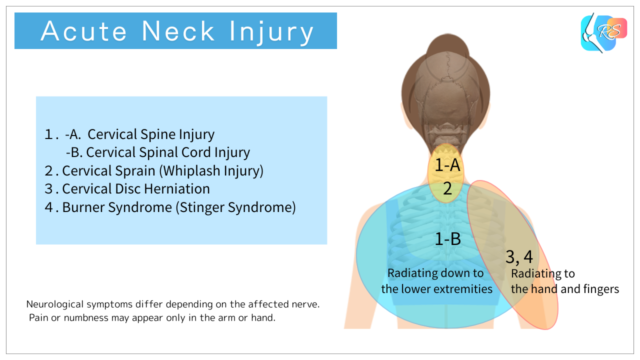
- 1. Cervical Spine Injury / Cervical Spinal Cord Injury
The cervical spine refers to the bones of the neck, while the spinal cord within is responsible for movement, sensation, breathing, and blood pressure regulation. Fractures or dislocations of the cervical vertebrae are classified as cervical spine injuries, while damage to the spinal cord itself is termed a spinal cord injury. These injuries can cause paralysis, respiratory failure, and pose a serious risk to life. After a high-impact collision, the neck should not be moved unnecessarily.
- 2. Cervical Sprain (Whiplash)
Caused by sudden impact to the neck during sports or traffic accidents, resulting in pain from muscles, ligaments, or nerves. More severe injuries such as fractures or spinal cord damage are excluded. Typical symptoms include pain during neck movement.
- 3. Cervical Disc Herniation
Occurs when a cervical disc becomes damaged or deformed and compresses the spinal cord or nerve roots. Repetitive stress is a common cause, but symptoms may also appear after a single traumatic event. Symptoms include neck pain, unilateral arm numbness or pain, and in severe cases, weakness or paralysis.
- 4. Burner / Stinger Syndrome
A transient nerve injury caused by traction or compression during contact sports such as tackling. Characterized by a burning sensation from the neck to the arm, often accompanied by numbness or temporary muscle weakness. Symptoms usually resolve quickly but may persist in some cases.

Chronic Neck Conditions
– Gradual Onset of Pain
This section focuses on neck problems that develop gradually over time.
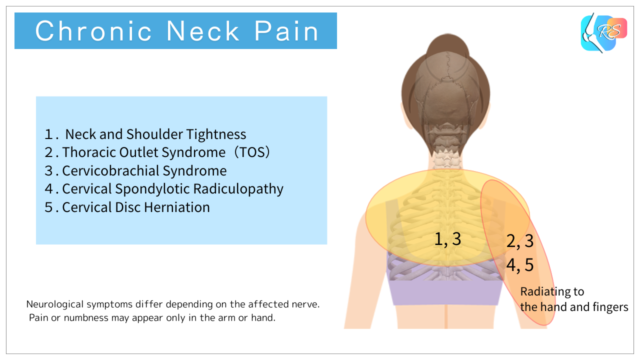
- 1. Neck and Shoulder Stiffness
Characterized by tightness, discomfort, or pain from the neck through the shoulders and upper back. Poor posture and chronic muscle fatigue are common contributors, and symptoms may include headaches or dizziness.
- 2. Thoracic Outlet Syndrome
Caused by compression or traction of nerves and blood vessels between the neck and arm. Symptoms include numbness and pain in the arm or hand. Often associated with poor posture and activities involving frequent overhead movements.
- 3. Cervicobrachial Syndrome
A diagnosis made after excluding other conditions, characterized by pain, numbness, and stiffness in the neck, shoulder, and arm. Often related to prolonged poor posture and nerve or muscle overload.
- 4. Cervical Radiculopathy / Cervical Myelopathy
Degenerative changes in the cervical spine can irritate nerve roots or the spinal cord. Symptoms include shoulder-to-hand pain, numbness, and symptoms worsened by neck extension. Repetitive neck loading in contact sports or age-related degeneration are common causes.
- 5. Cervical Disc Herniation
Chronic disc degeneration can also lead to nerve compression. Repetitive neck stress often causes persistent neck pain, arm numbness, and difficulty with fine motor control.
Summary
This article provided an overview of common causes of neck pain and neck injuries.
We will continue to explain each condition in more detail in future articles.