Thigh and Lower Leg Pain in Athletes: Common Sports Injuries, Overuse Causes, and When to Seek Care

Thigh (upper leg) and lower leg pain are extremely common in sport. Sometimes it starts with a clear moment—like a sprint, kick, jump landing, or contact. Other times it builds up gradually over days or weeks as training load accumulates.
In most cases, the key tissues involved are muscle and bone. Common examples include muscle strains and stress fractures.
This page is designed as a hub to help you organize your symptoms by:
- Onset: sudden (acute) vs gradual (overuse)
- Location: thigh vs lower leg
Use this guide as a starting point to narrow down what might be going on. If one item matches your symptoms, move on to the detailed page for that condition (cause, evaluation, treatment, and return-to-sport planning).
What You’ll Learn in This Article
- Common causes of thigh and lower leg pain in athletes
- How to think differently about sudden pain vs gradually worsening pain
- Key features of common diagnoses (muscle strain, stress fracture, shin splints, compartment syndrome)
- Warning signs that suggest you should seek medical evaluation
- How to use this hub page to access condition-specific guides
A helpful first step is asking: did the pain start all at once, or has it been getting progressively worse? This alone can narrow the likely causes.
Also, managing the problem the wrong way can lead to persistent symptoms or repeated flare-ups. Below, we organize common conditions in a practical way.
目次
Condition Overview (Alphabetical Order)
Thigh (Upper Leg)
- Femoral stress fracture
- Rectus femoris strain
- Thigh contusion
- Adductor strain
- Hamstring strain
- Proximal hamstring tendinopathy
Lower Leg
- Acute compartment syndrome (lower leg)
- Lower leg contusion
- Tibial stress fracture
- Shin splints (medial tibial stress syndrome)
- Fibular stress fracture
- Gastrocnemius strain
- Soleus strain
- Chronic exertional compartment syndrome
Acute Injuries
– Sudden Onset Pain
If you can point to a specific moment—“that’s when it happened”—think first about acute injuries such as muscle strain, contusion, or (less commonly) acute compartment syndrome.
Thigh
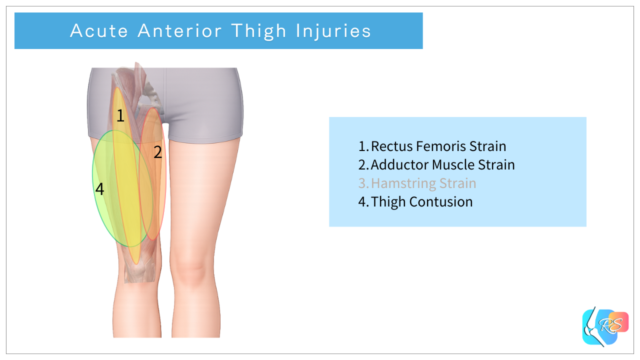
- 1. Rectus Femoris Strain
A strain of the rectus femoris (front thigh). Pain often occurs during sprinting or kicking. Walking and stairs may hurt, and there is usually localized tenderness when you press the area. - 2. Adductor Strain
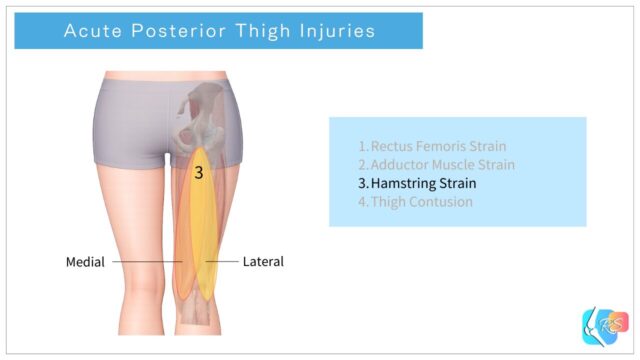
A strain of the inner-thigh adductor muscles. Pain is often triggered by sprinting, kicking, cutting, or lateral movements. Stretching the inner thigh commonly reproduces pain. - 3. Hamstring Strain
A strain of the hamstrings (back thigh), commonly during acceleration or sudden deceleration. Pain may worsen with forward bending or knee extension. - 4. Thigh Contusion
A direct blow to the thigh (often the lateral side). Pain increases with weight-bearing and bending the knee. Swelling, bruising, and limited range of motion may occur.

A gradual, step-by-step progression back to full load is important.
Lower Leg
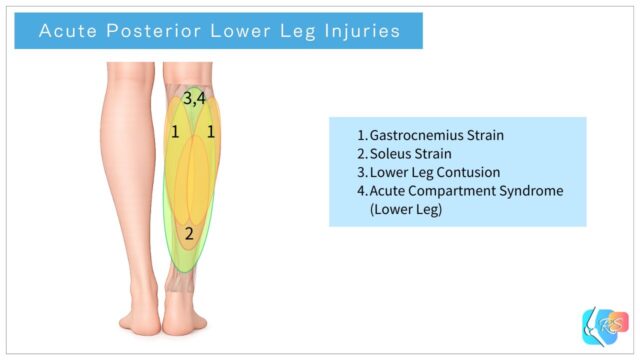
- 1. Gastrocnemius Strain
A strain of the superficial calf muscle. Pain often occurs with heel raises or stretching the Achilles with the knee straight. It may start during a sudden sprint or jump, and some athletes feel lingering discomfort when walking. - 2. Soleus Strain
A strain of the deeper calf muscle. Pain is more likely with heel raises or Achilles stretching with the knee bent. It can feel like a deep, dull ache, especially after longer running sessions. - 3. Lower Leg Contusion
A bruise to the lower leg (calf pain can become severe). Stretching may be painful. If swelling is significant, compartment syndrome should be considered. - 4. Acute Compartment Syndrome
A serious condition where bleeding and swelling after a fracture or contusion raise pressure inside a muscle compartment and compromise nerves and blood vessels. Severe persistent pain, numbness, and difficulty moving the ankle or toes are red flags and require urgent medical evaluation.

If you have symptoms that suggest acute compartment syndrome (severe persistent pain, numbness, or difficulty moving the toes), seek medical evaluation promptly.
Chronic (Overuse) Conditions
– Gradual Onset Pain
If pain has been creeping up gradually—especially after a rapid increase in running, jumping, or overall training volume—consider overuse problems such as tendinopathy, shin splints (MTSS), stress reactions, or stress fractures.
Thigh
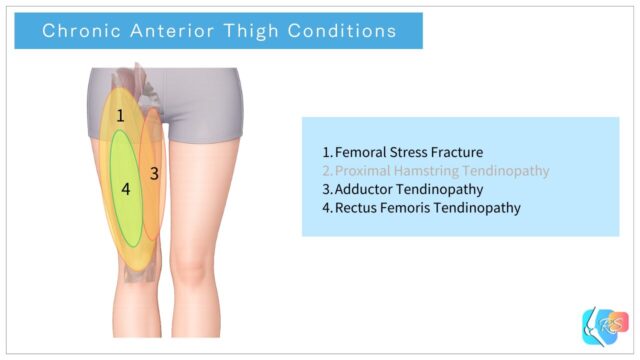
- 1. Femoral Stress Fracture
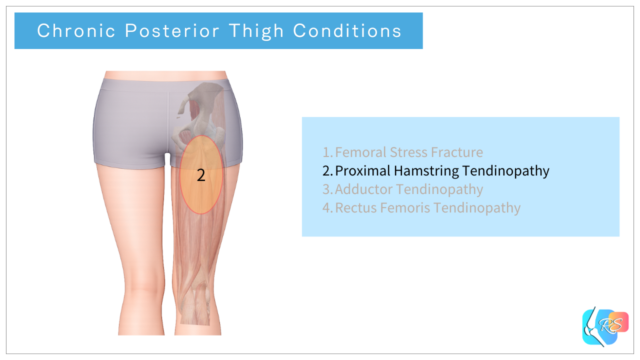
A stress fracture of the femur, more common in runners. Pain can be hard to pinpoint (thigh to knee region), and hopping may provoke symptoms. Pain often improves with rest but tends to flare up again when activity resumes. - 2. Proximal Hamstring Tendinopathy
Deep pain near the sit bone and back of the thigh. Symptoms can be worse at the start of exercise and after prolonged sitting. - 3. Adductor Tendinopathy / Overuse-Related Groin Pain
Tightness or pain on the inner thigh. Symptoms may worsen with changes of direction or movements that open the hip outward. - 4. Rectus Femoris Overuse-Related Anterior Thigh Pain
Front thigh tightness or pain that may be associated with repetitive kicking or repeated stair/climbing loads. Chronic overload is often a contributor.
If symptoms are not improving over several days, consider a medical assessment.
Lower Leg
- 1. Tibial Stress Fracture
Common in runners and jumping athletes. Focal tenderness on the tibia and pain with hopping are typical. In more advanced cases, pain may appear even at rest. - 2. Fibular Stress Fracture
Pain on the outside of the lower leg. Symptoms often worsen with weight-bearing and landing. - 3. Shin Splints (Medial Tibial Stress Syndrome)
Pain along the inner border of the tibia, often after a sudden increase in training load. Compared with stress fracture, tenderness is more likely to be diffuse rather than pinpoint. If pain becomes focal, persists at rest, or worsens quickly, a stress fracture should be considered. - 4. Chronic Exertional Compartment Syndrome
Tightness and pain that develop after a period of exercise and improve with rest. Some athletes describe cramping, pressure, or weakness during running.
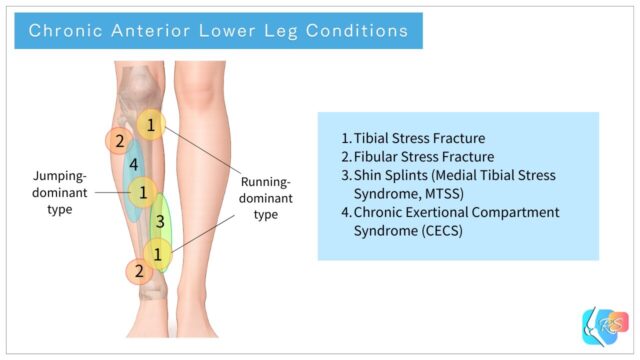
In practice, distinguishing stress fracture from shin splints (MTSS) is a common challenge.
Summary
Thigh and lower leg pain in athletes can often be organized using two questions:
- Did it start suddenly after a specific movement or contact? (acute injury)
- Did it develop gradually as training load accumulated? (overuse condition)
This hub page is meant to help you quickly get the big picture. If a specific condition seems to match, review the detailed guide for that diagnosis to understand the cause, evaluation, treatment options, and a safe return-to-sport plan.
Consider prompt medical evaluation if you have any of the following:
- Inability to bear weight or walk
- Severe swelling, visible deformity, or rapidly expanding bruising
- Severe pain that continues even at rest
- Numbness, weakness, or difficulty moving the toes
This article is intended for educational purposes and does not replace individualized medical advice. If you are concerned about your symptoms, consult a qualified healthcare professional.