Hip and Groin Pain: Common Causes, Acute Injuries, and Chronic Conditions

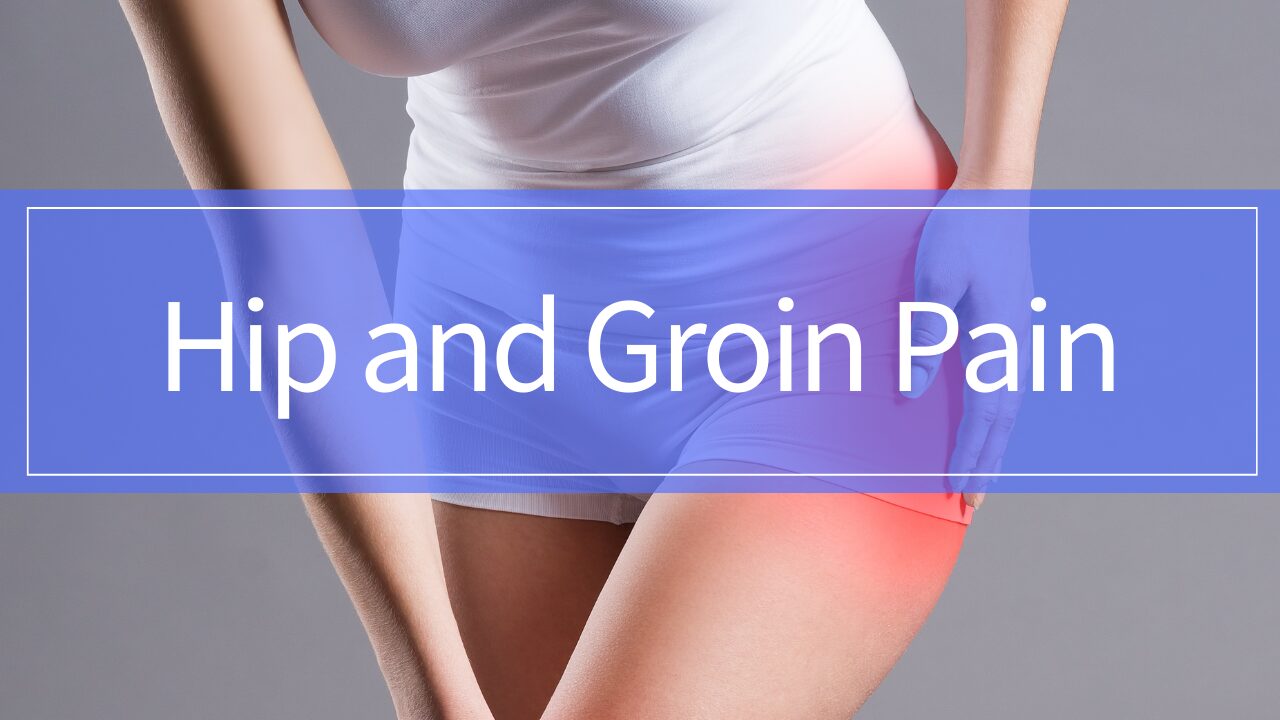
Hip and groin pain can easily become persistent, and it’s a common source of frustration for athletes.
Because the hip is surrounded by large, powerful muscles, muscle tightness can make hip movement feel restricted more easily.
In addition, alignment issues in the spine or pelvis can often place extra stress on the hip and contribute to symptoms.
When tightness or alignment problems are left unaddressed, hip pain may become long-lasting.
In this article, we’ll organize the most common causes of hip and groin pain in a practical way.
目次
List of Conditions (A–Z)
- AIIS Avulsion Fracture (Anterior Inferior Iliac Spine)
- Groin Pain Syndrome
- Anterior Hip “Pinching” (Soft-Tissue Related)
- Hip Labral Tear
- Sciatica
- Snapping Hip Syndrome
- Iliopsoas Strain / Iliopsoas Tendinopathy
- Adductor Strain
- Deep Hip External Rotator Strain (Obturator Muscles)
- Hip Osteoarthritis
- Piriformis Syndrome
- FAI (Femoroacetabular Impingement)
Acute Injuries
– Sudden Onset of Pain
This section summarizes hip/groin pain where you can clearly identify the moment the pain began.
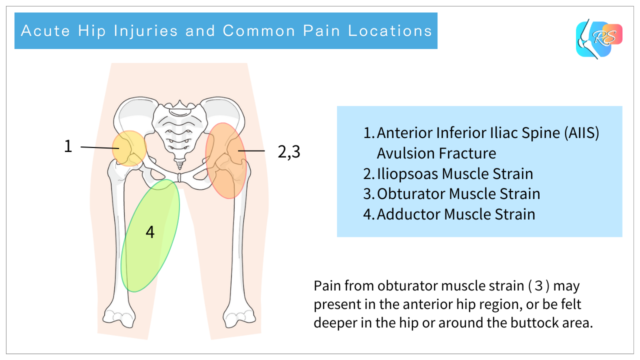
- 1. AIIS Avulsion Fracture (Anterior Inferior Iliac Spine)
A growth-related avulsion fracture of the pelvis (AIIS), most often seen in youth athletes. Pain can be sharp at the moment of kicking or sprinting, and walking may remain painful afterward. - 2. Iliopsoas Strain / Iliopsoas Tendinopathy
Pain tends to appear deep in the front of the hip (often near the groin). Symptoms often worsen with kicking, sprinting, or jumping, and hip flexion (lifting the thigh) can be provocative. - 3. Deep Hip External Rotator Strain (Obturator Muscles)
A strain involving deep hip external rotators (including the obturator muscles). Pain is often felt deep in the hip and can resemble iliopsoas-related pain. Kicking and rotational movements of the hip may trigger symptoms. - 4. Adductor Strain
A strain of the inner-thigh adductors. Pain often appears with kicking, cutting movements, or sprinting. Because recurrence is common, returning too early—even after pain improves—can increase the risk of re-injury.

Early medical evaluation is a safer choice.
Chronic Conditions
– Gradual Onset of Pain
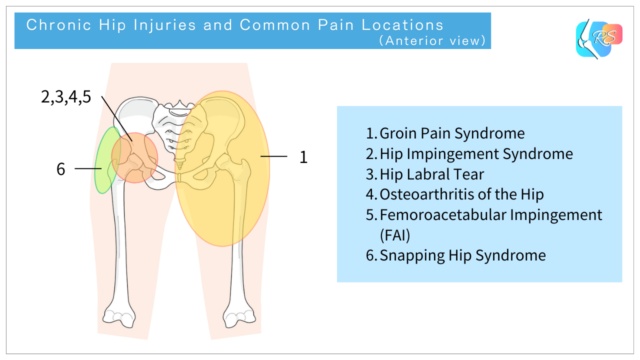
- 1. Groin Pain Syndrome
A broad term for pain around the groin (front of the hip). The exact source can be hard to isolate. Symptoms can become persistent and may take longer to settle if ignored. - 2. Anterior Hip “Pinching” (Soft-Tissue Related)
A general category for “pinching” or “catching” pain in the front of the hip when bending the hip. Tightness or reduced glide of soft tissues (muscle, tendon, capsule) may contribute, and symptoms often fluctuate with movement and load. - 3. Hip Labral Tear
Damage to the labrum on the socket (acetabulum) side of the hip. It can cause deep hip pain and a catching sensation. Cutting, pivoting, or deep hip flexion may aggravate symptoms, and surgery may be considered in some cases. - 4. Hip Osteoarthritis
Hip pain related to age-related cartilage wear and bony changes, more common in middle-aged and older adults. Pain and stiffness are often most noticeable when starting to move, and symptoms may worsen with walking or stairs as the condition progresses. - 5. FAI (Femoroacetabular Impingement)
A bony “pinching” problem caused by shape differences in the femur and/or acetabulum. Front-of-hip pain often appears with deep hip flexion. FAI is commonly classified as Cam type, Pincer type, or Mixed type. - 6. Snapping Hip Syndrome
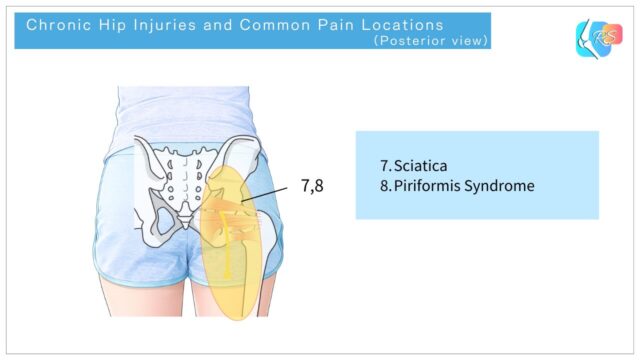
A snapping or popping sensation felt during hip movement. It can occur when structures such as the iliotibial band (lateral) or iliopsoas (anterior) move over bony landmarks. If it is painful, it deserves attention. - 7. Sciatica
Pain or numbness that can spread from the buttock down the back of the thigh when the sciatic nerve is irritated. Symptoms may change with sitting, bending forward, or increased load on the low back/pelvis, and the primary source is sometimes from the spine or pelvis rather than the hip itself. - 8. Piriformis Syndrome
Tightness in the piriformis (deep buttock muscle) can irritate the sciatic nerve and cause pain or numbness. Symptoms often worsen with prolonged sitting or after exercise, and commonly appear in the buttock and the back of the thigh.

Because the causes vary, identifying the underlying source is the key.
Summary
We organized common causes of hip and groin pain into acute injuries and chronic conditions.
Next, we’ll explain each condition in more detail, including typical symptoms and rehabilitation considerations.